
The Ultimate Guide to THT Assembly Process: Ensuring Reliability in Heavy-Duty Electronics
In the era of miniaturization dominated by Surface Mount Technology (SMT), Through-Hole Technology (THT) remains a cornerstone for industries requiring maximum mechanical strength and high-power handling. Whether you are developing industrial controllers or aerospace power systems, understanding the THT assembly process is critical for ensuring product longevity.
At Wells, we combine decades of expertise in both SMT and THT to deliver robust electronic solutions. In this guide, we’ll dive deep into the technical steps, benefits, and design considerations of the THT process.
What is THT Assembly?
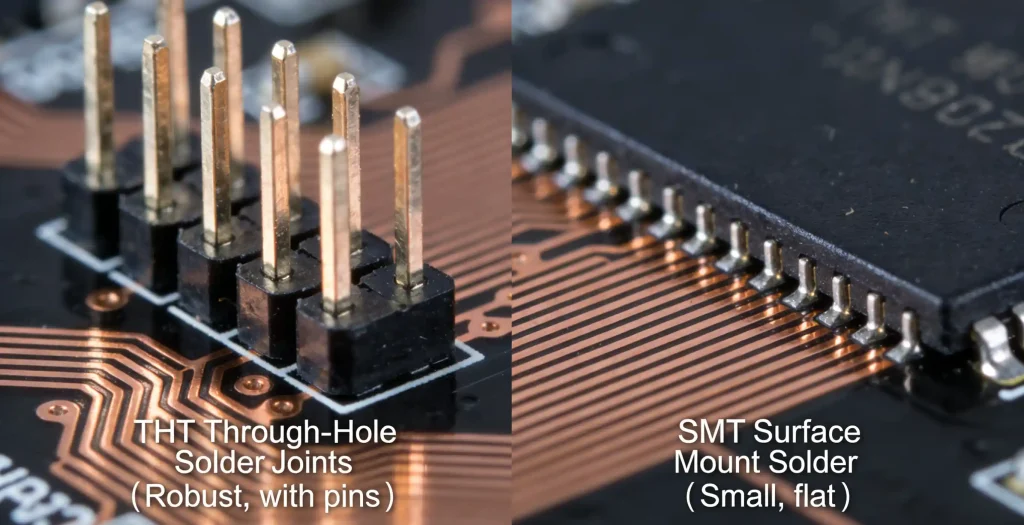
Through-Hole Technology (THT) involves inserting electronic component leads into pre-drilled holes on a printed circuit board (PCB) and soldering them on the opposite side. Unlike SMT, where components are mounted on the surface, THT creates a physical bond that penetrates the board.
For a broader perspective on how this fits into the overall production cycle, check out our comprehensive PCBA manufacturing guide.
The Step-by-Step THT Assembly Process
The reliability of a THT joint depends on a precise, multi-stage workflow. Here is how professional manufacturers like Wells PCBA manage the process:

1. Component Preparation & Pre-forming
Before assembly, component leads must be bent and trimmed to fit the specific pitch of the PCB holes. This ensures that components sit flush against the board and prevents stress on the solder joints.
2. Component Placement
While high-volume SMT uses high-speed pick-and-place machines (as detailed in our RK3588 SMT assembly guide), THT placement is often a hybrid of manual and automated insertion (AI). Skilled technicians place bulkier components like transformers and large capacitors by hand to ensure perfect alignment.
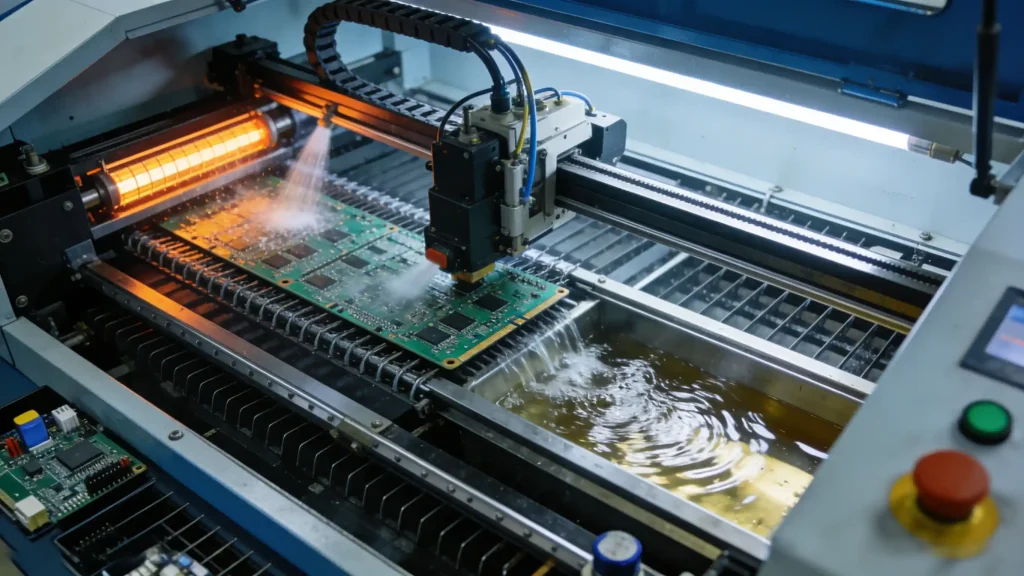
3. Soldering: Wave vs. Manual
This is the most critical stage of the THT assembly process.
- Wave Soldering: The board passes over a “wave” of molten solder. This is the standard for high-efficiency mass production.
- Manual Soldering: Used for low-volume prototypes or boards with sensitive components that cannot withstand the heat of a wave soldering machine.
- Selective Soldering: A modern precision method that solders individual through-hole points without affecting nearby SMT components.
4. Inspection and Quality Control
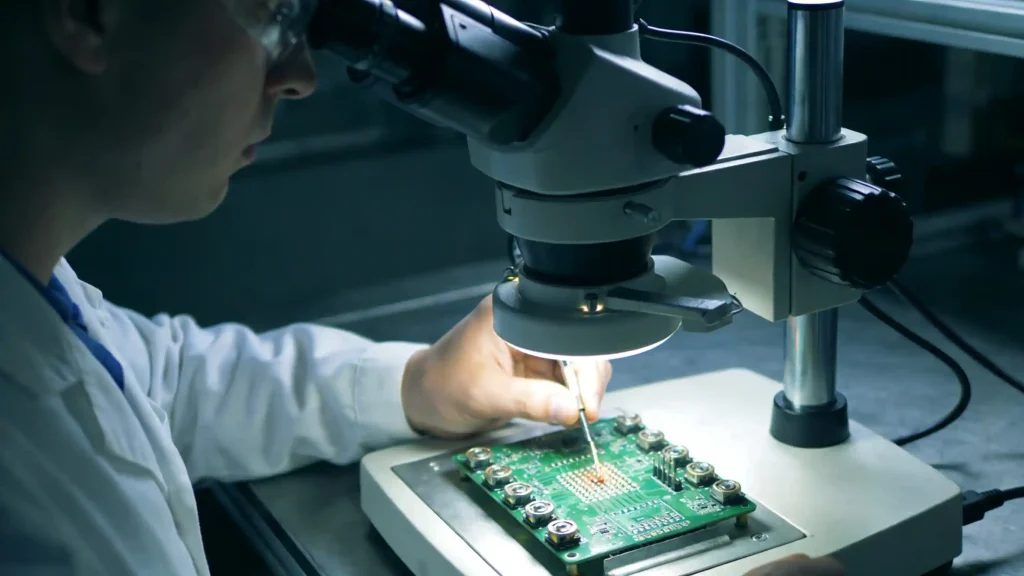
After soldering, every board undergoes rigorous testing. This includes AOI (Automated Optical Inspection) and visual checks to identify issues like solder bridging or “cold joints.” According to IPC-A-610 standards, the gold standard for electronics acceptability, a perfect through-hole joint must show 100% hole fill for maximum conductivity.
THT vs. SMT: Why THT Still Matters
While SMT offers higher density, THT excels in specific areas. If you are still debating which technology suits your project, refer to our detailed analysis on PCB vs. PCBA and mounting technologies.
| Feature | THT (Through-Hole) | SMT (Surface Mount) |
| Mechanical Strength | Exceptional (High) | Moderate |
| Component Density | Low | Very High |
| Power Handling | High (Ideal for high voltage) | Lower |
| Prototyping | Easier for manual repairs | Complex |
Key Advantages for Industrial Buyers
If your product operates in harsh environments, the THT assembly process offers three non-negotiable benefits:
- Durability: The physical bond of the leads through the board allows the PCBA to withstand extreme vibrations and mechanical shocks.
- Heat Resistance: THT components are often used in power supplies because they can dissipate heat more effectively through the PCB layers.
- Reliability: For mission-critical sectors like military or medical, THT is often the preferred choice to ensure zero-fail connections.
To understand how THT integrates with other manufacturing stages, visit our PCBA manufacturing process overview.
Design Best Practices for THT
To optimize your THT assembly process and reduce costs, keep these engineering tips in mind:
- Hole-to-Lead Ratio: Ensure the drill hole is roughly 0.2mm to 0.5mm larger than the component lead for optimal solder capillary action.
- Clearance: Maintain enough space between THT and SMT components to allow for soldering masks and tool access.
- Annular Rings: Ensure sufficient copper remains around the hole (annular ring) to prevent pad lifting during soldering.
Conclusion: Partner with a Specialized PCBA Expert
The THT assembly process is far from obsolete; it is the backbone of high-reliability electronics. By choosing a partner like Wells PCBA, you gain access to a refined manufacturing flow that ensures every joint is built to last.
Ready to start your next project? Contact the Wells team today for a technical review of your design or a competitive quote on our THT and SMT assembly services.




 Spanish
  English
  French
  Portuguese
  German
  Italian