
High-Volume PCB Assembly Services: Scalable Manufacturing Solutions for Industrial Electronics
High-volume PCB assembly refers to the automated manufacturing of printed circuit boards in quantities typically exceeding 5,000 units, where process stability, cost efficiency, and consistent quality become critical factors.
In today’s rapidly evolving industrial landscape, high-volume PCB assembly services are no longer just about speed—they are about precision, consistency, and scalability. From industrial automation systems to smart energy infrastructure, manufacturers require thousands—or even millions—of identical, high-reliability circuit boards delivered without variation.
At Poços, we specialize in delivering scalable PCBA manufacturing solutions that balance high throughput with micron-level accuracy. By integrating advanced automation, strict process control, and engineering-driven optimization, we ensure every unit meets industrial-grade performance standards.
👉 Explore our full capabilities: PCB Assembly Services

The Full-Scale PCBA Manufacturing Workflow
Optimized DFM (Design for Manufacturing) Review
Before production begins, our engineering team conducts a comprehensive DFM analysis to eliminate risks and reduce costs at scale.
This includes:
- Component footprint verification
- Thermal and signal integrity considerations
- Panelization optimization for mass production
- BOM risk analysis and substitution planning
DFM is critical in high-volume production because even a minor design inefficiency can multiply into significant cost overruns.
Automated SMT & Through-Hole Assembly Line
Our fully automated SMT lines are equipped with:
- High-speed pick-and-place machines
- Reflow soldering systems with precise thermal profiling
- Wave soldering for through-hole components
This ensures:
- Consistent placement accuracy
- Reduced human error
- Stable output even under large production loads
👉 Learn more about our capabilities SMT Assembly Services.
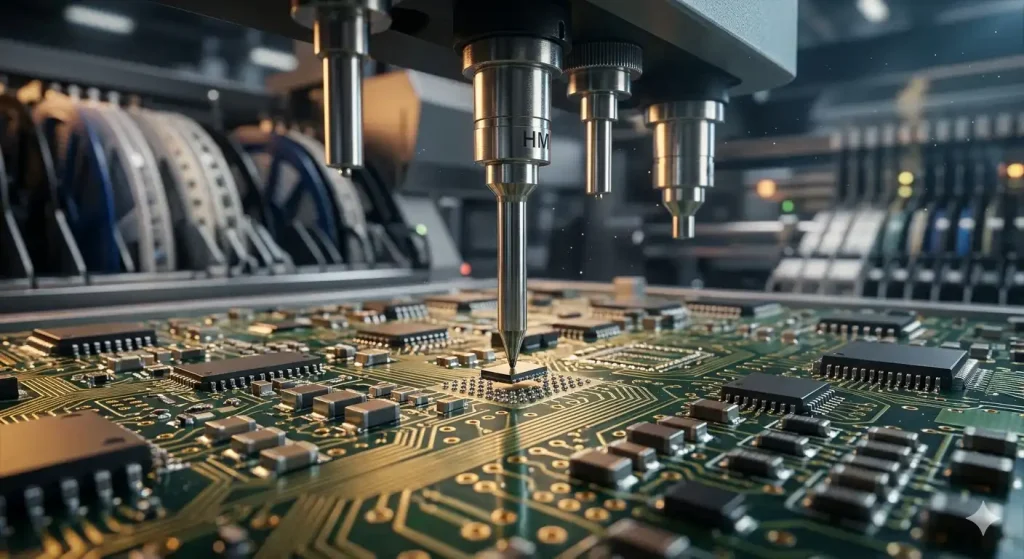
Precision Solder Paste Printing & Component Placement
Solder paste printing is one of the most critical steps in ensuring solder joint reliability.
We utilize:
- High-precision stencil alignment systems
- Automated solder paste inspection (SPI)
- Real-time process monitoring
This guarantees:
- Uniform solder volume
- Strong and reliable joints
- Reduced defect rates in mass production
Rigorous Quality Control for Zero-Defect Mass Production
In high-volume PCB assembly, quality is not inspected in—it is engineered into every step.
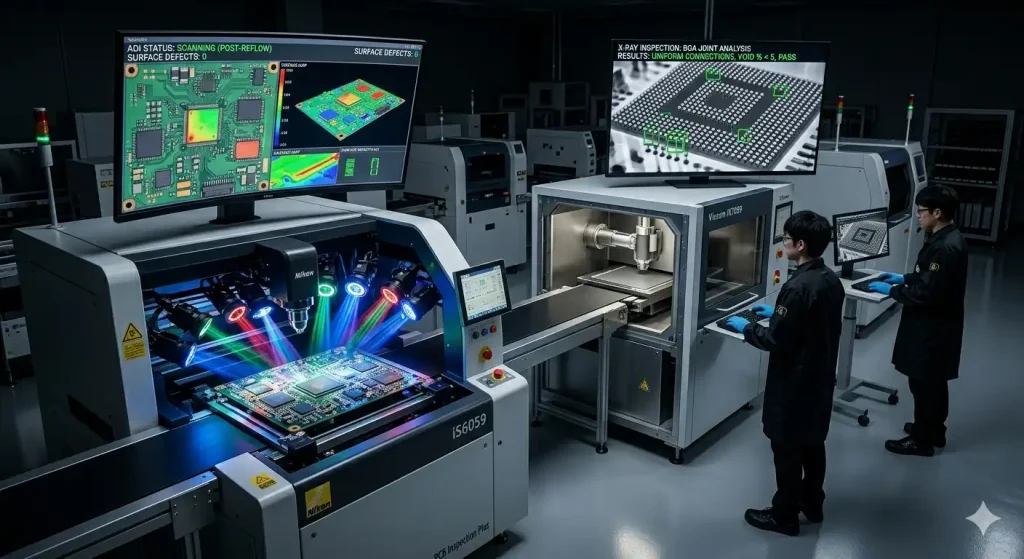
Advanced Inspection: AOI, X-Ray, and SPI
We implement multi-layer inspection systems including:
- Automated Optical Inspection (AOI)
- X-ray inspection for BGA and hidden joints
- Solder Paste Inspection (SPI)
For reference, industry inspection standards follow guidelines such as: IPC Standards (IPC-A-610)
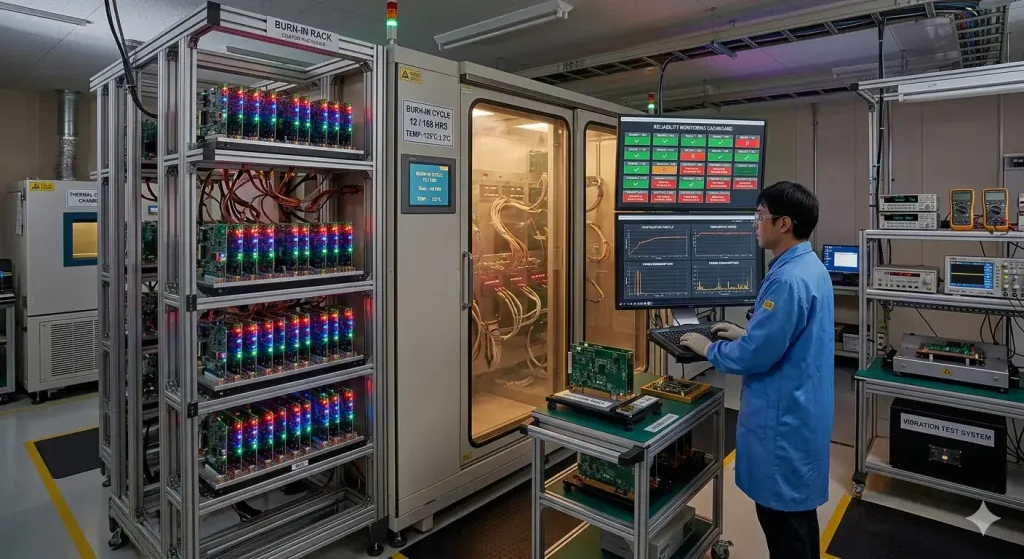
Functional Circuit Testing (FCT) & Burn-in Testing
To ensure long-term reliability, especially for industrial applications, we perform:
- Functional Circuit Testing (FCT)
- Aging and burn-in testing under load conditions
This validates:
- Electrical performance
- Thermal stability
- Lifecycle durability
Compliance & Certifications: ISO 9001 & IPC Standards
WellsPCBA adheres to globally recognized standards, including:
- ISO 9001 Quality Management Systems
- IPC-A-610 Acceptability Standards
For certification reference: ISO 9001 Quality Management.
These certifications ensure consistent quality across every production batch.
Vertical Industry Applications
Industrial Automation & Embedded Systems
We support industrial-grade embedded platforms, including ARM-based solutions such as RK3588-powered systems, widely used in:
- Machine vision
- Edge AI computing
- Industrial control systems
👉 Related solution: Industrial Applications.
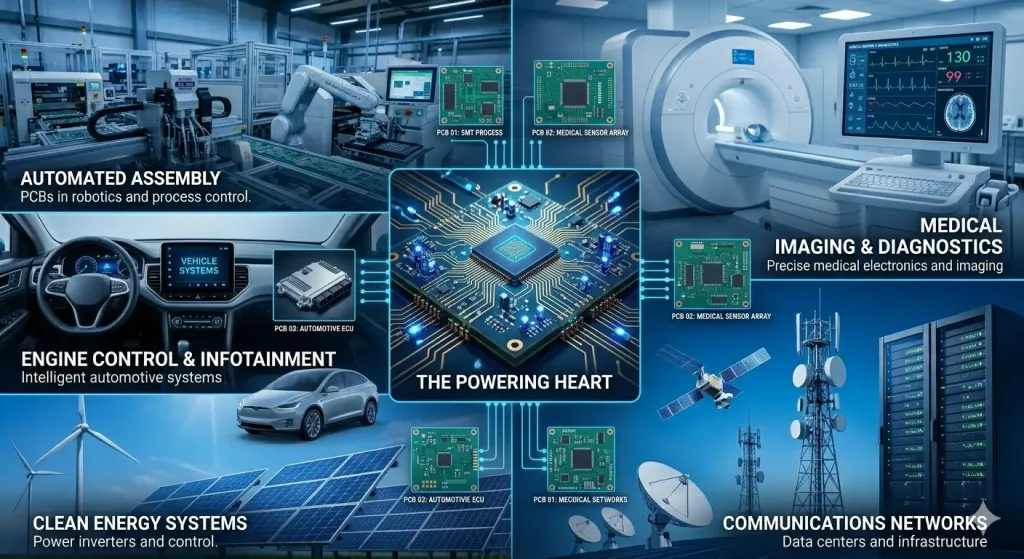
Medical Electronics & High-Reliability Devices
Medical PCBA requires:
- Zero-defect tolerance
- Traceability
- Long lifecycle reliability
Our controlled processes ensure compliance with stringent healthcare standards.
Smart Energy & Automotive Electronics
Applications include:
- Battery management systems (BMS)
- EV control units
- Smart grid infrastructure
These industries demand extreme reliability and environmental resilience, which we deliver through robust manufacturing processes.
Cost Breakdown of High-Volume PCB Assembly
| Components | 60–80% |
| Assembly | 15–25% |
| Testing | 5–10% |
Why Choose Wells for Your High-Volume Projects?
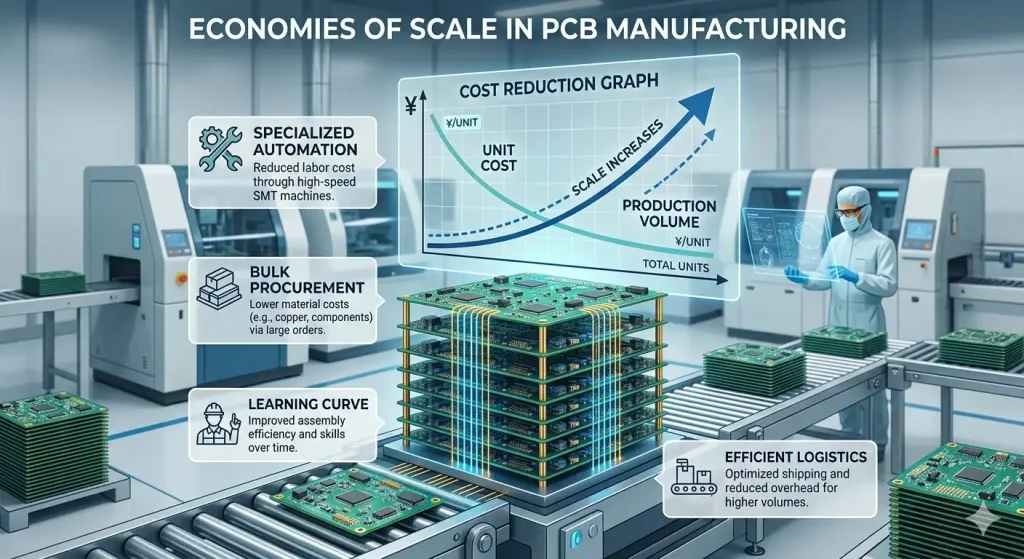
Cost Efficiency through Economies of Scale
High-volume production allows:
- Lower per-unit cost
- Optimized material utilization
- Reduced setup overhead
We pass these savings directly to our clients.
Supply Chain Excellence & Component Sourcing
Component shortages are one of the biggest risks in mass production.
Wells mitigates this through:
- Global supplier network
- Authorized component sourcing
- Strategic inventory management
Rapid Lead Times & Global Logistics Support
We provide:
- Flexible production scheduling
- Worldwide shipping and logistics coordination
- Fast prototyping to mass production transition
Common Challenges in High-Volume PCB Assembly
| Challenge | Risk | Wells Solution |
|---|---|---|
| Yield instability | Increased cost | Process control & automation |
| Component shortages | Production delays | Global sourcing strategy |
| Design flaws | Mass defects | DFM optimization |
| Thermal issues | Solder failure | Reflow profiling |
FAQ: Key Insights into Large-Scale PCBA
Q1:What defines “high-volume” in PCB assembly?
High-volume PCB assembly typically refers to production runs ranging from thousands to millions of units, where automation and process optimization become essential for cost and quality control.
Q2:How does WellsPCBA ensure consistency across thousands of units?
We ensure consistency through:
- Automated production lines
- Multi-stage inspection systems (AOI, SPI, X-ray)
- Strict adherence to IPC and ISO standards
- Continuous process monitoring and data tracking
Q3:Can you handle high-mix, high-volume production?
Yes. Wells supports high-mix, high-volume manufacturing, allowing clients to produce multiple product variants efficiently without compromising quality or lead time.
Q4:What files are required to start a high-volume PCB assembly project?
Typically, we require:
- Gerber files
- BOM (Bill of Materials)
- Pick and Place files
- Assembly drawings
Q5:How do you handle component shortages?
We proactively manage supply risks through:
- Alternative component sourcing
- Approved vendor lists (AVL)
- Advance procurement strategies
Conclusion: Partner with an Expert for Seamless Scaling
Scaling from prototype to high-volume production requires more than just manufacturing capacity—it requires engineering expertise, process control, and supply chain reliability.
At Wells, we provide end-to-end solutions that ensure your product is manufactured efficiently, consistently, and at scale.




 Portuguese
  English
  French
  Spanish
  German
  Italian