
What is PCBA Manufacturing? A Complete Guide for Procurement Professionals
Printed Circuit Board Assembly (PCBA) is the process of assembling electronic components onto a PCB (Printed Circuit Board) to create a functional electronic device.
For procurement professionals, especially in Europa, understanding PCBA is critical. It allows buyers to:
- Evaluate manufacturing capabilities
- Ensure product quality
- Optimize cost and delivery schedules
For a comprehensive deep dive, visit our dedicated PCBA Manufacturing Guide .
Why This Matters for Compliance
European buyers must navigate strict regulations. Understanding PCBA helps in verifying compliance with RoHS 3 (EU) 2015/863 regarding hazardous substances and ensuring that assembly processes are capable of meeting CE marking requirements for electromagnetic compatibility.
Key Components of PCBA Assembly
Surface Mount Technology (SMT) Components
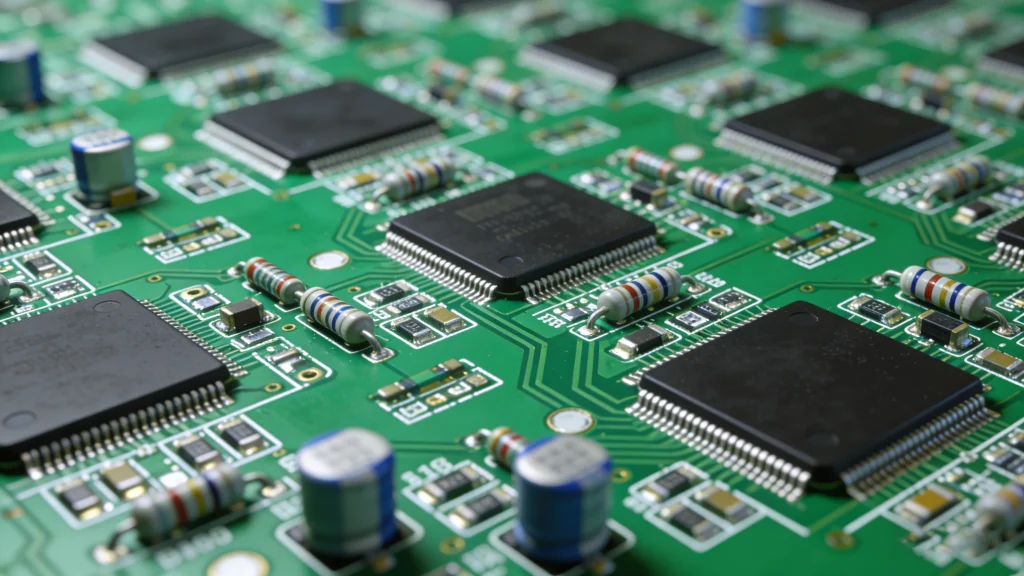
SMT is the dominant method where components are placed directly onto the surface of the board. It allows for high-speed placement of miniature parts like resistors, capacitors, and microcontrollers.
- Procurement Insight: SMT lines require precise stencil printing and reflow ovens. When auditing a supplier, inquire about their paste inspection (SPI) processes.
- Learn More: Explore the detailed SMT Assembly Process .
Through-Hole Technology (THT) Components
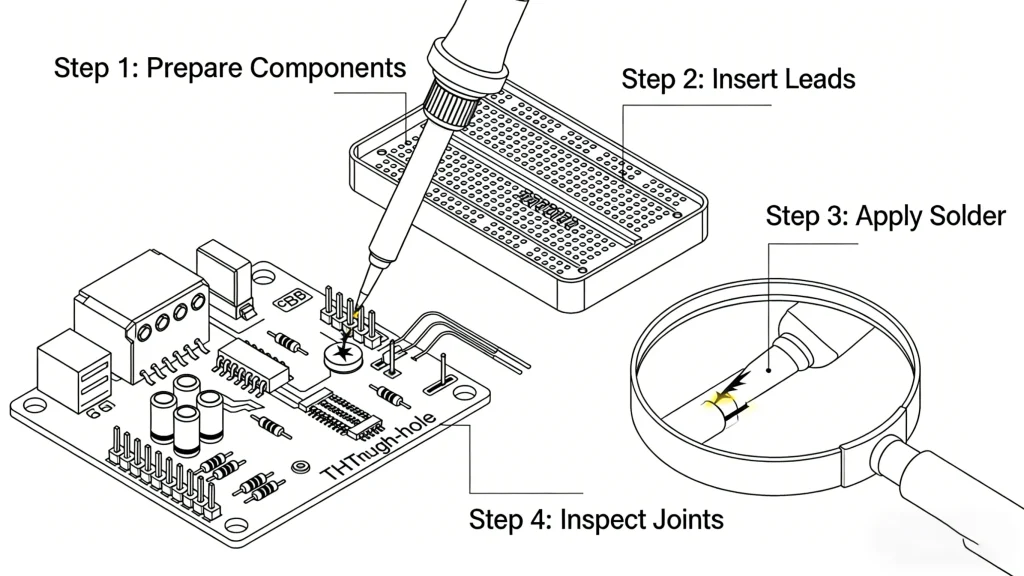
THT involves inserting component leads through drilled holes and soldering them on the opposite side. While more labor-intensive, it provides superior mechanical bonding, making it essential for connectors, transformers, and large capacitors that face physical stress.
- Procurement Insight: Verify if your supplier uses selective soldering or hand soldering for THT, as this impacts consistency.
- Learn More: Read about the THT Assembly Process .
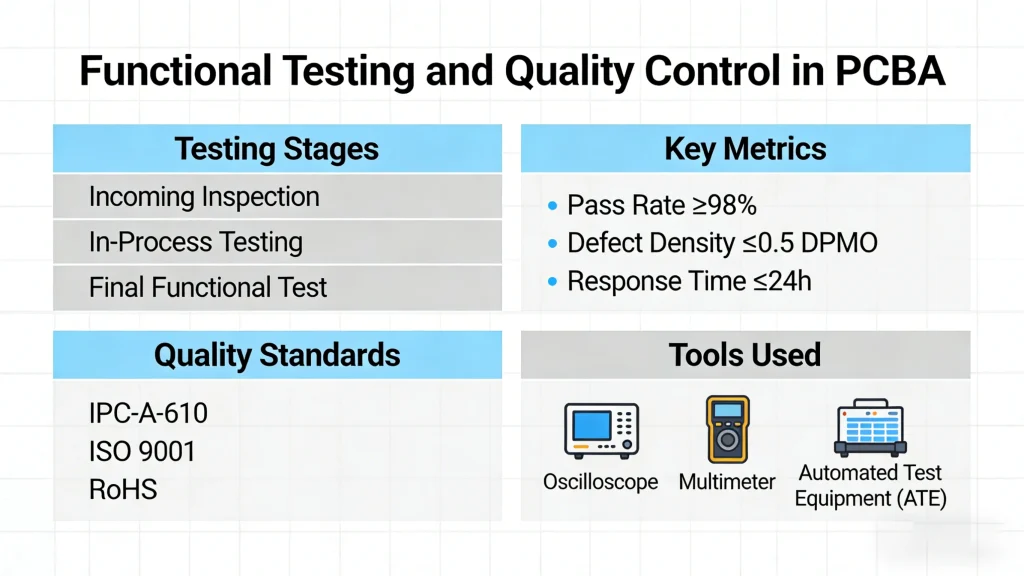
- Authority Standard: European buyers should verify that suppliers adhere to IPC-A-610 Class 2 or 3 standards for THT and SMT assemblies, depending on your product’s end-use (industrial vs. high-performance).
The PCBA Manufacturing Process Overview
Understanding the workflow helps buyers identify potential bottlenecks or quality risks.
- Design & File Verification: Engineers prepare Gerber files (board layout), Bill of Materials (BOM) , and Pick-and-Place files. Procurement Tip: Ensure your supplier performs a Design for Manufacturability (DFM) check here.
- Component Sourcing: This is a critical procurement decision. You can choose between Turnkey PCBA (manufacturer sources all parts) or Consignment PCBA (you provide the parts).
- Assembly: The physical process involving solder paste application, SMT placement, reflow soldering, and THT insertion/wave soldering.
- Inspection & Testing: This is your quality gate. Key tests include Automated Optical Inspection (AOI) for solder defects, X-ray for hidden joints (like BGAs), and Functional Circuit Testing (FCT) to verify power-on function.
- Authority Standard: Testing should be validated against IPC-9252 guidelines for electrical testing.
How Understanding PCBA Empowers European Buyers
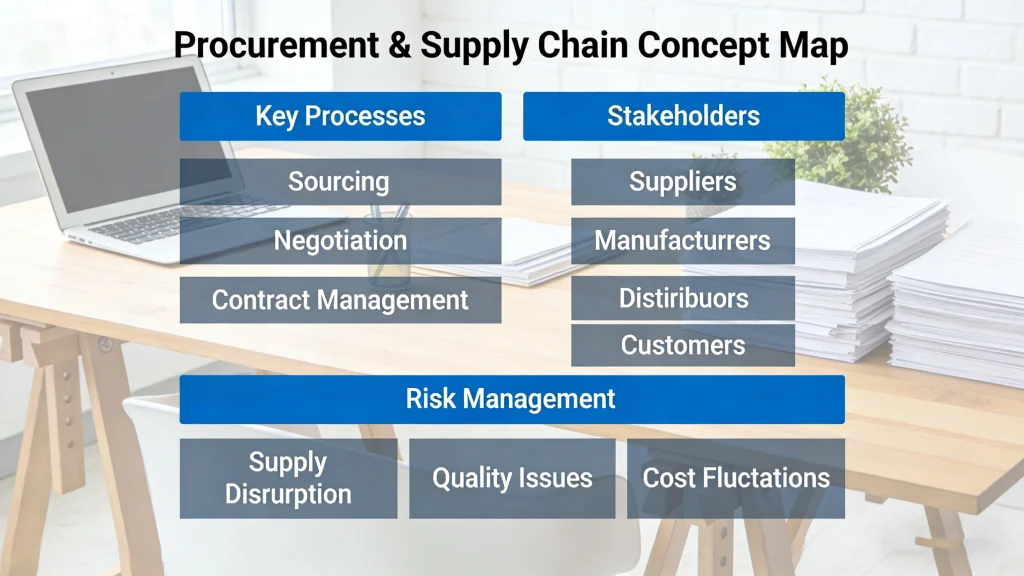
European buyers face unique challenges: strict environmental compliance (RoHS/REACH), longer product lifecycles requiring component obsolescence management, and high reliability standards.
Understanding the nuances of PCBA helps you:
- Avoid Costly Errors: Recognizing that a BOM with obsolete parts or a design with poor pad-to-part ratio will delay your time-to-market.
- Select the Right Partner: Asking the right questions about a manufacturer’s supply chain resilience and their experience with CE certification processes.
- Ensure Faster Time-to-Market: When you understand the process, you can make faster decisions on BOM approvals and test plan validation.
A Real-World Procurement Insight
“A common pitfall for buyers is assuming all ‘equivalent’ components are the same. A capacitor’s tolerance or temperature rating might look fine on paper but fail during European temperature cycling tests. A knowledgeable buyer will always ask the CM (Contract Manufacturer) for the component datasheets and verify they meet the environmental specs required for the final product’s destination.”
To simplify your sourcing strategy, explore how Turnkey PCBA manufacturing can reduce the burden of managing dozens of component suppliers yourself.
Internal & External References
Internal Resources:
Authority External Links & Standards:




 Italian
  English
  French
  Spanish
  Portuguese
  German