
SMT vs THT: Key Differences, Cost Comparison & Best PCB Assembly Method (2026 Guide)
In modern electronics manufacturing, choosing between SMT (Surface Mount Technology) and THT (Through-Hole Technology) is not just a technical decision—it directly impacts product performance, reliability, and overall production cost.
At Wells PCBA, we frequently hear engineers ask:
“Should I use SMT or through-hole for my PCB assembly?”
This guide provides a clear SMT vs THT comparison, including differences, cost analysis, and real-world applications—so you can choose the right method for your project.
What is SMT (Surface Mount Technology)?
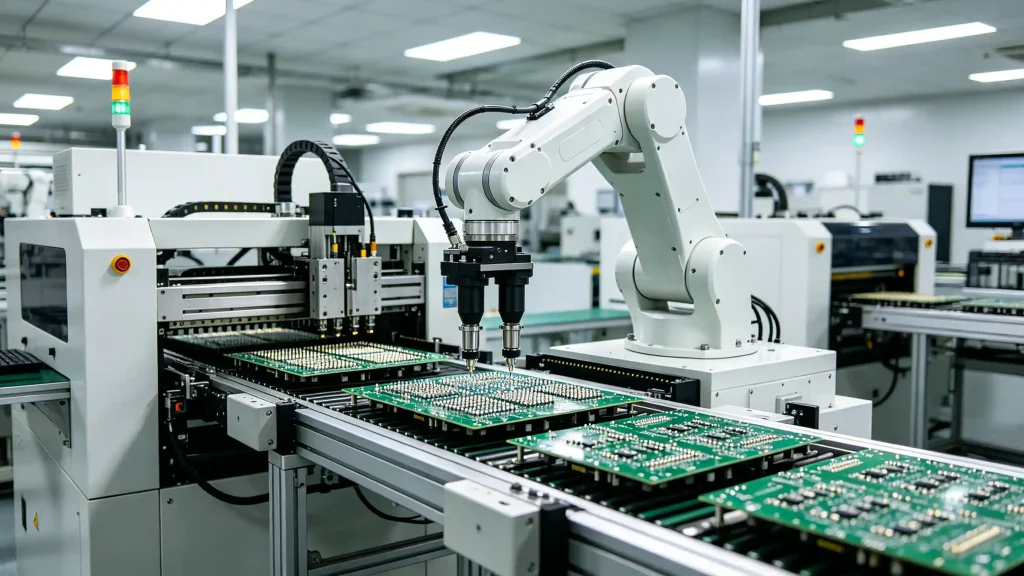
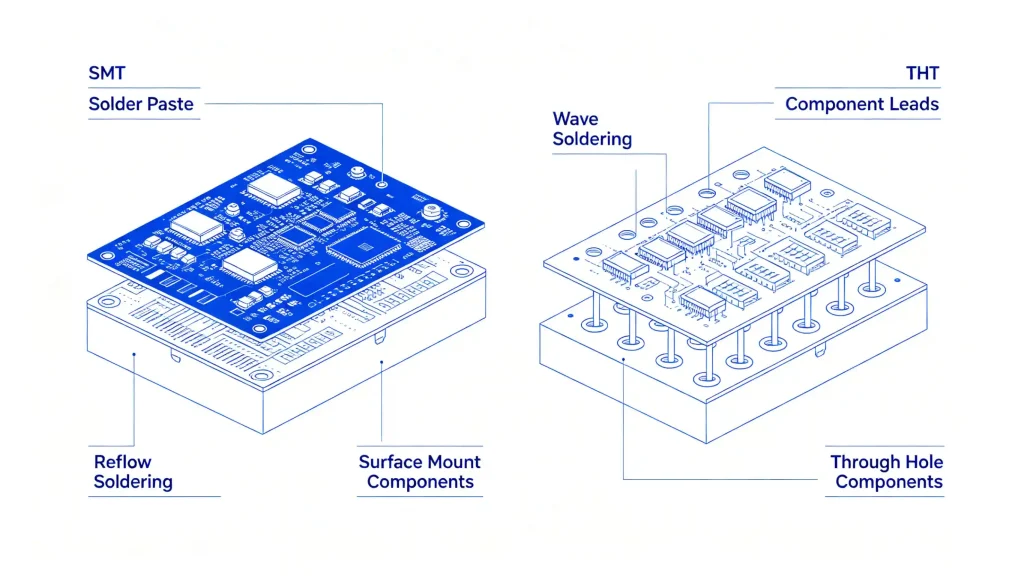
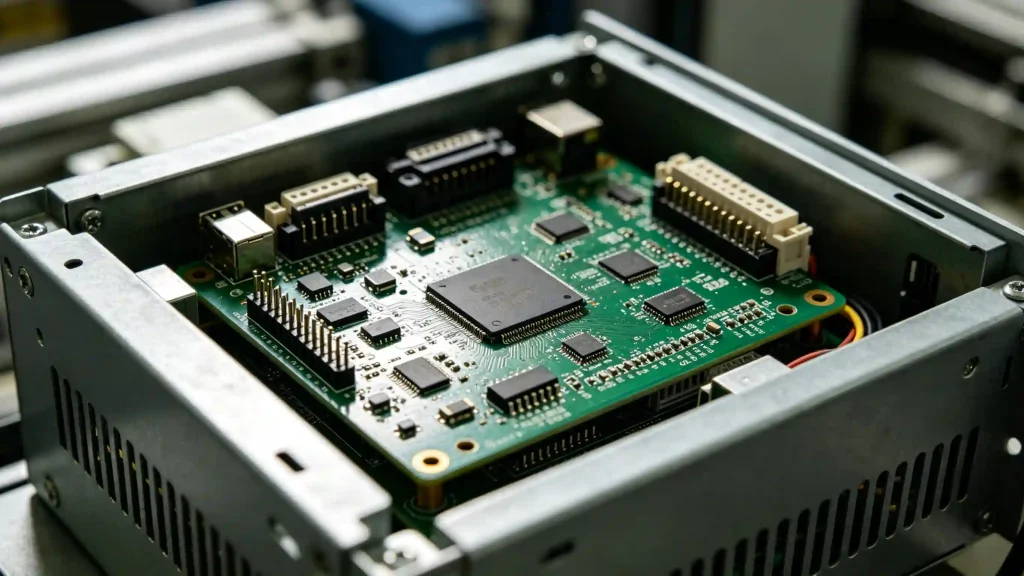
Surface Mount Technology (SMT) is a PCB assembly method where components are mounted directly onto the surface of the board.
These components, known as SMD (Surface Mount Devices), are placed using automated pick-and-place machines and soldered using reflow ovens.
👉 For a real-world high-density example, see our
RK3588 SMT assembly guide, which explains how SMT handles complex, high-speed processors.
Advantages of SMT:
Supports ultra-compact designs
Ideal for high-speed circuits
Enables fully automated mass production
Lower cost at scale
What is THT (Through-Hole Technology)?
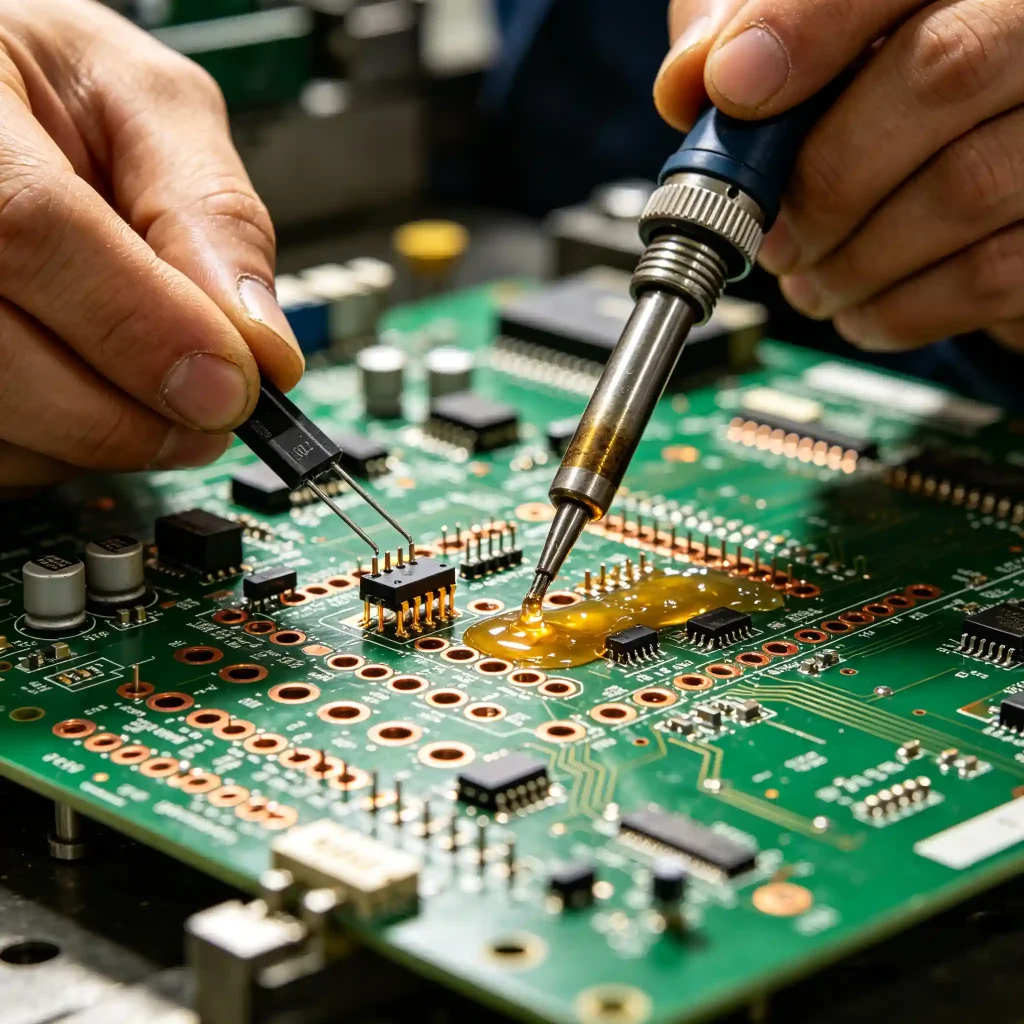
Through-Hole Technology (THT) involves inserting component leads into drilled holes on the PCB and soldering them on the opposite side.
This creates a strong mechanical bond, making it highly reliable under stress.
👉 To understand the full workflow, check our detailed
through-hole PCB assembly process.
Advantages of THT:
Extremely durable connections
Better for high-stress environments
Strong resistance to vibration and heat
SMT vs THT: Key Differences
| Feature | SMT | THT |
|---|---|---|
| Component Size | Very small (01005) | Larger |
| Assembly Speed | Fully automated | Slower |
| Mechanical Strength | Moderate | Very strong |
| PCB Holes | Minimal | Required |
| Signal Performance | Excellent | Moderate |
SMT vs THT Cost Comparison
1. Manufacturing Cost
- SMT: Lower cost in high-volume production due to automation
- THT: Higher cost due to drilling and manual labor
2. Material & Shipping
- SMT boards are smaller and lighter, reducing logistics costs
- THT components are bulkier and more expensive
👉 According to the IPC-A-610 electronics assembly standard, SMT processes benefit from higher consistency and automated inspection accuracy.
SMT enables high-speed signal performance and is widely used in modern digital and RF circuits. Compared with traditional through-hole structures, SMT components have shorter electrical paths and reduced parasitic inductance, which helps improve signal integrity in high-frequency designs.
For deeper academic and industry-level research on high-frequency PCB design and electronic packaging performance, refer to IEEE electronic engineering publications.
When to Use SMT vs THT
Choose SMT if you need:
- Compact PCB design
- High-speed signal performance
- Mass production scalability
👉 SMT is widely used in advanced computing boards. Learn more in our RK3588 SMT assembly guide.
Choose THT if you need:
- High durability under vibration
- High current or voltage handling
- Easy prototyping and manual replacemen
👉 For industrial applications, see our through-hole PCB assembly process.
Hybrid PCB Assembly (Best Practice)
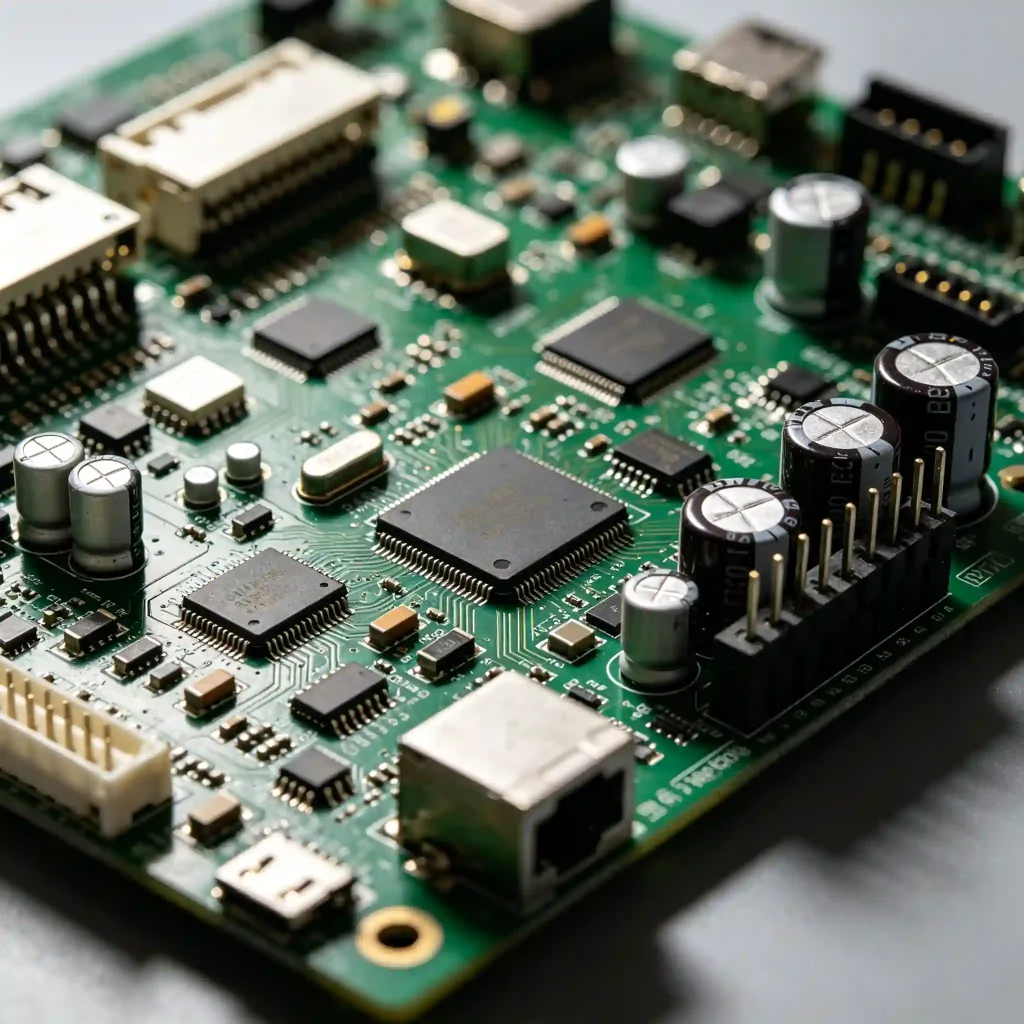
In modern electronics, many designs use a mixed assembly approach:
- SMT for ICs and high-speed circuits
- THT for connectors and power components
This approach combines:
- High density
- Strong mechanical reliability
SMT vs THT: Which One is Better?
For most modern electronics (around 90% of applications), SMT is the preferred choice due to:
- Lower cost
- Higher efficiency
- Better signal performance
However, THT remains essential for:
- Industrial equipment
- Automotive systems
- Power electronics
FAQ
What is the difference between SMT and THT?
SMT mounts components on the surface, while THT inserts them through holes for stronger bonding.
Is SMT cheaper than THT?
Yes, SMT is more cost-effective in large-scale production due to automation.
Can SMT replace THT completely?
No. THT is still required for high-power and mechanical stress applications.
Which is better for industrial PCB assembly?
THT or hybrid assembly is typically better for durability and reliability.
Ready to start your PCB assembly project?
At Wells PCBA, we provide:
- High-speed SMT assembly
- Reliable THT solutions
- Full turnkey PCB manufacturing
👉 Contact our engineers today to get a fast and accurate quote.




 English
  French
  Spanish
  Portuguese
  German
  Italian